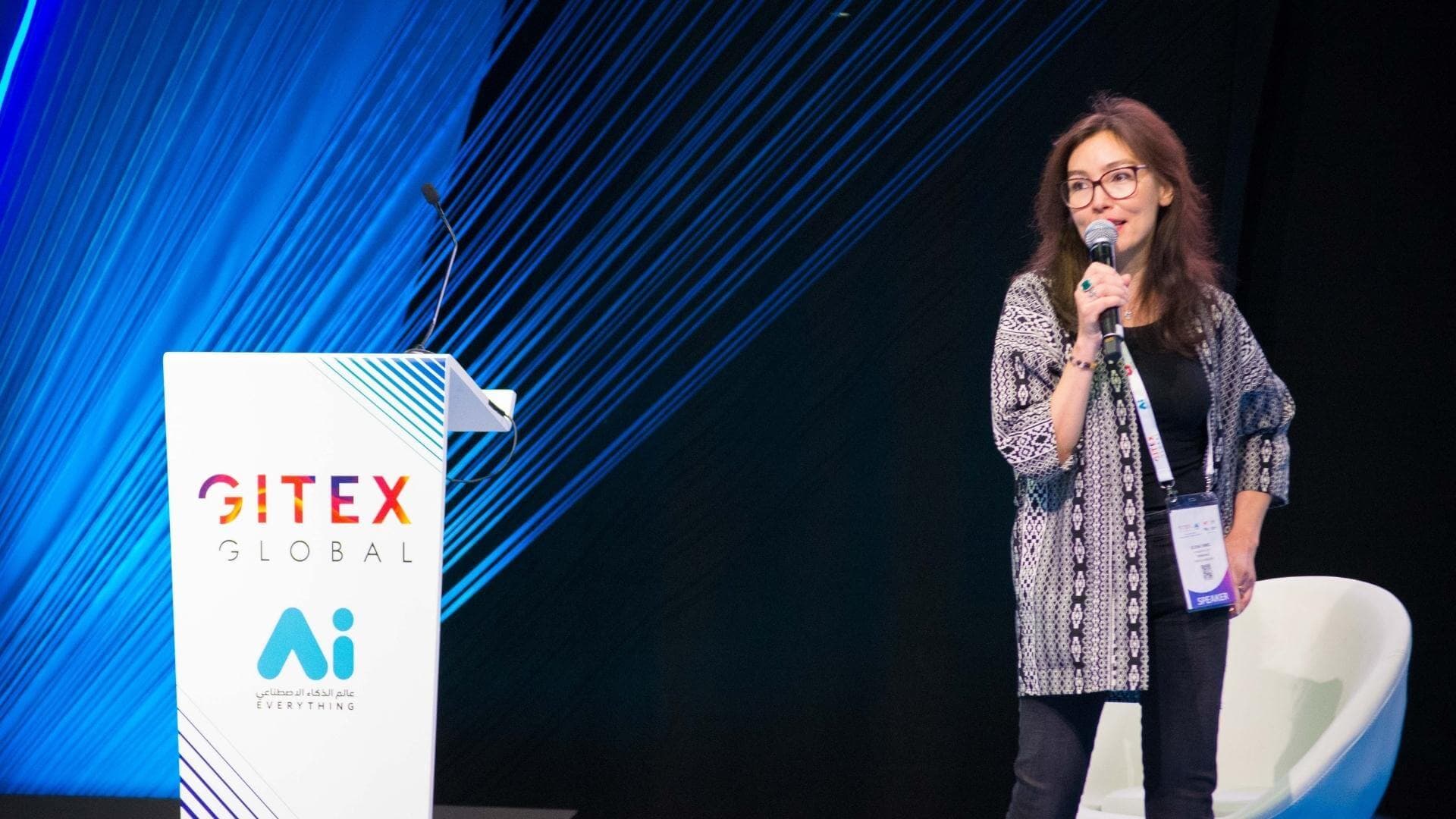
Booking an AI keynote speaker is not simply a matter of finding someone with impressive credentials. The technology is moving fast, audiences arrive with very different levels of knowledge, and the stakes — for organisations trying to make sense of AI — are real.
Here is what event organisers should look for when choosing someone to speak on AI.
Why AI events need more than a technical overview
The challenge with AI as a topic is that it can go in almost any direction. A purely technical talk can leave non-technical audiences behind. A talk focused entirely on hype can leave leaders feeling excited but directionless. The best AI keynote speakers find the space between those two extremes — grounding the conversation in something that is honest, clear and genuinely useful.
That means looking for speakers who understand AI from more than one angle. Someone who has worked with organisations, educators, young people or policymakers will bring a perspective that is harder to find in a purely technical or purely commercial speaker.
Look for real-world experience
The most credible AI speakers are those who have applied what they talk about. Whether that is building a company, running education programmes, contributing to policy discussions or working directly with communities, real-world experience changes how a talk lands.
It also makes a speaker more adaptable. Someone with hands-on experience can respond to audience questions, adjust their framing for different sectors and speak with confidence beyond the script.
Make sure the speaker can explain AI clearly
This sounds obvious, but it is not always the case. Some speakers who know AI deeply struggle to explain it to audiences who do not share that background. Others who speak about AI broadly cannot handle technical follow-up questions.
The right balance depends on your audience. If you are addressing senior executives, you need someone who can link AI to business outcomes, risk and leadership. If you are addressing educators or students, you need someone who can make the technology feel approachable and relevant. Ask for a showreel or references from similar events before you book.
Ethics should not be an afterthought
Any serious AI speaker should be able to address the ethical dimensions of AI — bias, transparency, accountability, fairness, the impact on jobs and education. These are not niche concerns. They are central to how organisations, governments and individuals are thinking about AI right now.
A speaker who avoids or glosses over these questions may be technically fluent but will not leave your audience with the full picture. Ethics is not a separate topic. It is part of the AI conversation.
Match the speaker to your audience
The best AI keynote for a room of CTOs is not the best AI keynote for a school. The best AI keynote for a DEI event is not the best AI keynote for a fintech conference. Before you book, be honest about who will be in the room, what they already know, and what you want them to leave with.
A good speaker will ask these questions before they agree to an event. If they do not, that is worth noting.
Ask what the audience will leave with
The goal of a keynote is not just to inform. It is to shift how people think, ask better questions or take a concrete next step. Ask potential speakers what their audiences typically leave with. What do people say after the talk? What changes?
Speakers who have thought about this carefully will have good answers. Speakers who have not will give you a generic response about inspiration or awareness.
Final thoughts for event organisers
Choosing an AI speaker is a decision that shapes how your audience understands one of the most important topics of our time. The right speaker will make the technology clear, the ethics honest, and the conversation relevant to the people in the room.
Take time to ask the right questions, check references and match the speaker's experience to your audience's needs. The result is worth it.

Written by
Elena Sinel
Elena Sinel is an award-winning AI keynote speaker, FRSA and founder of Teens in AI. She speaks on ethical AI, diversity in technology and AI education at conferences and corporate events worldwide. Learn more about Elena.